Artificial Continuum

Showing posts with label Star Wars. Show all posts
Showing posts with label Star Wars. Show all posts
Sunday, November 6, 2011
 Star Wars: The Clone Wars-"The General" Review
 7:29 AM |
  Posted by
Nick
Posted by
Nick
Picking up shortly after last week's stellar introduction in the shadowy world of Umbara, "The General" transports instantly back into the action, characters, and moral dilemma that plotline has expressed. While it may not be as strong as last week's brutal arc opener, "The General" is still a suitably strong episode of the series and of the arc itself.
After their failed attempt at taking the Umbaran capital, General Krell, Rex, Fives, and their men find themselves pinned down by advancing Umbaran troops and air support. With their current plan failing, Krell is eager to accept a dire mission proposed by Obi-wan, who needs a key air base taken out in order for the invasion to work. However, the only way to accomplish such a task is by advancing exposed through a heavily armed Umbaran controlled area.
"The General" most succeeds in its continual portrayal of its clone protagonists. Each character, both new and old to our eyes, grow significantly throughout the course of the plot, and they soon become the heroes this show has needed since it began. What makes the clone army so compelling as storytelling devices is that ,unlike the Jedi, their fates are undecided, and as horrible as it may sound Krell is right in calling them expendable. Again, the true success of this arc or not rests on Dee Bradley Baker. Luckily, his work here is even more improved than last week's outing.
Rex is a continued standout. Its obvious that out of everyone involved under Krell's command, Rex is the one that is most emotionally and morally confused. He wants to help his men, but at the same time he, by nature, must put incredible trust in his commanding officer. Fives and Hardcase also shine in a moment of bizarrely genuine humor towards the episodes end. Kix, team medic, is also an unintentional standout. Only Jesse and Tup stand as being the most bizarrely underdeveloped out of the main squad.
However, whether "The General" works or not really depends upon the portrayal of General Krell. While suitably abrasive and intriguing, Krell still in many ways, good and bad, is an enigma. We still do not know why Krell is such a starkly different Jedi than any others we have seen. Also, if Krell is such a military genius, why does he continue to make such poor tactical decisions that just lead in men getting killed? There are parts where Krell truly excels at the role the writers have given him, but overall his character is still a frustrating mystery.
While not as down to Earth and gritty as last week's violent skirmishes, the battle scenes in "The General" are suitably violent and visually stunning. This time we focus in upon hulking war mechs driven by Umbaran soldiers. Its a different type of combat, and while different from the previous week's its still effective both visually and emotionally.
The animation of this arc still outshines anything the show has done to this point. In addition to improved facial animations and a planet that quite literally drips with atmosphere, there are some beautifully rendered and shot scenes, especially involving the episodes numerous action sequences.
With guest director Walter Murch at the helm (film editor for Apocalypse Now) "The General" it was hard for the episode to fail. While it may not be as gritty as last weeks and the character of Krell still frustrates, the episode continues to take us through what could be the best arc in Clone Wars history.
Score: -A
Saturday, October 29, 2011
Star Wars: The Clone Wars-“Darkness on Umbara” Review
8:57 AM |
Posted by
Nick
Despite a mediocre season opener and a two week break, The Clone Wars is back with a bang and violent vengeance. The much hyped four part Umbara saga has arrived, and with it delivering one of the most shocking, violent, and downright satisfying episodes of the show we have seen in months.
The shadowy world of Umbara has left the Republic, for reasons largely unknown. (There have been some rumblings that this is related to the death of their representative in “Senate Murders”, but there has been no confirmation on this fact.) The Republic once again joins in a front to bring the planet back under its rule. With Obi-Wan and Sassee Tiin tasked with taking back a separate section of the planet, Anakin along with the 501st(including: Rex, Fives, Jesse, Hardcase, Kix, and newcomers Dogma and Tup) are tasked with retaking the city’s capital. However, after a violent first assault Anakin is called back for mysterious reasons leaving the atypical General Krell involved.
If anything has to be said about “Darkness on Umbara” is that it is brutal. For the first time, the clones find themselves faced with an enemy with a human face, and things get decidedly nasty. The battles are visceral and intense, and for the first time since season 1’s “Trespass” there is a general sense of loss. There are numerous wince inducing scenes, as the men of the 501st meet horrible ends. Including several well-known clones to the mix adds a level of suspense that is often absent from the series, and after the dust clears from every round of artillery you find yourself looking to see if one of the big players has fallen. Like such war films Saving Private Ryan and Band of Brothers the sound blaster fire not only echoes a coming battle but a feeling of dread and worry.
Also worthy of mention is the inclusion of General Krell. Although his initial appearance reminds one too much of the hardass military commander, the atypical Besalisk Jedi only grows more intriguing as the episode draw along. If anything, Krell is an enigma. His character stands as so fundamentally different from almost every Jedi we have seen in the series so far, and his ultimate purpose soon becomes an important point of interest.
Dee Bradley Baker once again steals with his performance of the clones. The subtle alterations of his voice for the majority of the cast here is impressive, and essential for the success of this episode.
The animation is once again beautiful. The initial shots of the Republics ships shooting through the mist covered atmosphere of Umbara are suitably mystifying, and add that in the brutal battle scenes that follow and you have a visual stunner of an episode.
Perhaps where “Darkness on Umbara” is most interesting is that there is still so much to go. This episode more than delivered, but we still have three more installments on this shadowy world, and the ultimate destination is unclear. Who makes it off Umbara alive? Who is General Krell? What made this arc so disturbing that Dee Bradley Baker didn’t want to voice it? What will next week’s superstar director Walter Murch bring to the table? It’s intriguing, and more than a bit exciting.
Score: A
Friday, October 14, 2011
Star wars: The Clone Wars-"Nomad Droids" Review
6:09 PM |
Posted by
Nick
This week continued to tell the stories of everyone's favorite robotic duo as they traversed throughout the galaxy. Featuring numerous small stories and locations, "Nomad Droids" is, for better or for worse, one of the more unique episodes of the series.
Following the events seen in "Mercy Mission", C-3P0 and R2-D2 are stationed with Adi Gallia aboard her star cruiser before they are ambushed by General Grievous. Chaos breaks out, and soon 3P0 and R2 find themselves catapulted through numerous locales and facing strange dangers as they take a galaxy hopping journey to find their way home.
"Nomad Droids" quite essentially is a kitchen sink episode. The writers literally wasted no expense in throwing everything they possibly could into this story. One could seriously imagine nearly a dozen different scenarios for how the writing process for this episode went, and several involve a dart board. Somethings stick, and something's don't. Its hardly ever boring, but its not always good either.
3P0 and R2 are shot through locale and situation at break neck speed, and we are introduced to new ideas and characters just as quickly. One minute, we are being treated to The Clone Wars's rendition of Jonathon Swift's Gulliver's Travels. The next, we meet a group of redneck aliens, who worship a Wizard of Oz knock off. Its all very bizarre, and interjected throughout are attempts social satire, genuinely funny slapstick, interesting action scenes, and bizarre aliens. Its certainly a one of a kind episode.
The short mini-episodes themselves are really hit or miss. The first attempt at imitating Swift feels the most forced, especially when 3P0 quite literally pulls a Gulliver and attempts to educate the tiny aliens about correct government. None of the rest are really perfect, but they all have a level of fun to them.
What honestly work best are the episode bookends which showcase the droid duo on the frontlines of the war in sequences not too far removed from A New Hope. These feel the most naturally, and in a way showcase the two's interplay better than having them play god or the Tin Man. It also doesn't hurt that these sequences are expertly animated and lit, making an excellent opener and closer to an otherwise mediocre episode.
The animation in general continues to impress, but the sound work in this episode in particular is a standout. Particularly in the space battles and the numerous droids the team meet, "Nomad Droids" is an aural treat of an episode.
It may be unbalanced and bizarre, but "Nomad Droids" is a fun episode of The Clone Wars. While not on par with last week's "Mercy Mission", it once again utilizes its droid protagonists to their potential.
Score: -B
Saturday, October 8, 2011
Star Wars: The Clone Wars-"Mercy Mission" Review
7:46 AM |
Posted by
Nick
One thing Star Wars has always prided itself on delivering is a classic, and sometimes very light hearted, sense of adventure. That is what this week's R2 and C3P0 centric episode "Mercy Mission" attempted to deliver. This in and of itself sounds like it could be the set up for a fun half hour of television, but last year's catastrophe of an episode "Evil Plans" has made many fans (myself included) a bit apprehensive about "Mercy Mission" and next week's follow up "Nomad Droids".
The planet of Aleen has been hit with a massive earthquake. With its population and ecosystem in turmoil, Aleen has contacted a nearby Republic cruiser, containing fan favorite Commander Wolffe and the famous droid duo, to supply relief. However, what seems to be a routine supply drop soon develops into a twisting adventure through the planet's underground.
While lacking in action or serious drama, "Mercy Mission" is perhaps one of the most delightfully light hearted episodes of The Clone Wars to date. As opposed to previous side character episodes such as "Evil Plans" and "Shadow Warrior", "Mercy Mission" knows how to keep its tone consistent and to create a fun adventure without devolving to insulting humor/slapstick. There are moments of humor interspersed throughout the plot but they contain a certain genuine touch. C-3P0 and R2D2 bicker like an old married couple, and to be honest it's fun. The two droids have always had this interplay, and when the writers of Clone Wars find new ways of creating that humor without losing its base it's always fun.
Even the diminutive tribal species, the Aleena, for the most escape the typical "Ewok" trap. (In a great moment of meta humor, a clone even acknowledges the fan's worries for the introduction of the goofy little reptiles.) Although undeniably played for the cute factor, the Aleena don't overstay their welcome.
An easy standout in "Mercy Mission" is the portrayal of clone commander Wolffe. Although Wolffe has appeared in numerous episodes of the show in the past, this is the first time he has been featured as one of the primary characters to the plot. Surrounded by the bickering droid "couple" and the endless cute factor of the Aleena, Wolffe is a solid rock that grounds the episode in reality. Dee Bradley Baker's voice acting helps to carry the character's curmudgeonly depiction a long way.]
Visually, "Mercy Mission" contains numerous standout set pieces. The initial shots of the Republic entering the planet's atmosphere are absolutely stunning. The scenery and creature design shine in particular when visiting the planet's subterranean world. Particularly fascinating are a group of tree like creatures that the two droid's encounter briefly in their voyage. The only aspect that truly falls flat is the bizarre fairylike character of Orphe. In addition to her off putting design, her writing and voice work simply don't seem to mesh with the rest of the episode not to mention the Star Wars universe in general.
Although its lacking in action and features one incredibly off putting character, there is little denying the heart and fun that "Mercy Mission" possess.
Score: B
Saturday, October 1, 2011
Star Wars: The Clone Wars-"Shadow Warrior"
7:57 AM |
Posted by
Nick
Gungans. Why'd it have to be Gungans? There are few less respected additions to the Star Wars universe than the bumbling pseudo-racial stereotypes from Naboo. That being said the gungans weren't all that was wrong with this week's episode of The Clone Wars. While possessing some interesting moments, and the welcome appearance of two the series's villains, "Shadow Warrior" ranks as one episodes of the series we have seen since last year's "Pursuit of Peace".
Turmoil has broken out on Naboo. The Gungan army under the sway of the Separatists has declared war on the surface dwelling population. As Jar Jar, Padme, and Anakin attempt to create peace between the two races, the leader of the Gungan people is injured. With the forces of General Grievous approaching, Jar Jar must take on a role of leadership and prevent war.
There are many things wrong with "Shadow Warrior", and believe it or not most of them exist outside of Jar Jar and his aquatic foes. While their slurred speech and antics still may seem rediculous and offensive to some viewers, the Gungans, including Jar Jar himself, have simmered down considerably since their first appearance into the Phantom Menace. Here we are given an interesting view into their world, and surprisingly it isn't all that bad.
The reason why "Shadow Warrior" really doesn't work is how disjointed the episode feels. There are really two or three plots competing for screentime here, and at times it feels as if it were really three episodes crammed into one, which to be honest may have been for the best.
Although not the best episode of the series, the first half of "Shadow Warrior" wasn't anything unacceptable. We were being treated to a story of Gungan intrigue with some actually moderatley amusing Jar Jar antics. The Clone Wars is allowed to take breaks from its grimmer more violent stories on occasion for more fun storylines, but the condition is that they must be executed well. We get that for about twelve minutes, but then "Shadow Warrior" explodes into something must bigger faster than it can control.
This shift in scope begins when General Grievous faces off against an army of Gungans. Although the scene itself was decently executed (and featured the death of recognizeable character as well), the outcome catapults the episode into a completely separate plotline that proceeds to dominate the final ten minutes. The story itself isn't horrible, but it feels so separate from what we have seen before that the transition is jarring and awkward. Its even stranger that at episode's end, the writers proceed to tell us that the episode really was about Jar Jar the whole time even though he truly had nothing to do with the conclusion.
There is one scene however within these final minutes that is truly noteworthy and that is the brief confrontation between Anakin and Count Dooku. Brilliantly choreographed and smoothly animated, this brief two minute scene is truly the highlight of "Shadow Warrior".
Perhaps even more disappointing in "Shadow Warrior" is the jarring drop in animation quality. Despite advances in water technology, The Clone Wars crew seems to still be having difficulty with creating digital grass. That being said the crew should have known better than to place half the episode on the plane's of Naboo. In certain scenes where the lighting is particularly dark, the scenery truly looks like it escaped from a Gamecube game.
All in all, "Shadow Warrior" is frustratingly poor episode in both plotting and animation. Despite an above average start and a great hero-villain confrontation, at its best it merely reaches levels of mediocrity.
Score: C
Saturday, September 24, 2011
Star Wars: The Clone Wars-"Prisoners" Review
8:14 AM |
Posted by
Nick
Our heroes are in a dire situation. "Prisoners" brings about the final episode of the Mon Cala arc with a opening that is probably as bleak as we've seen on the show (perhaps outside of "The Citadel" arc last season). Heroes are captured, a king is on the run, and Riff Tamson stands as proud leader of Mon Cala. While, "Prisoners" brings about a suitably satisfying conclusion to this opening art to Season 4, it (like its predecessors) is still flawed, but suitably entertaining.
Following the disastrous results of the battle seen in "Gungan Attack", Anakin, Padme, Ackbar, Jar Jar, Fisto, and their armies have been captured by Separatist forces. As Tamson attempts to torture the location of Prince Lee Char out of the surviving Republic leadership, Ahsoka and the fleeing Prince must develop a plan to not only rescue their people but win back their planet.
One thing that "Prisoners" and the entirety of this arc has provided well is a sense of scale. The battles, environments, and even the consequences of battle seem larger than we have seen so far in the series. Although the end result of this episode is really no surprise, there is a suitable amount of tension leading up to its climax.
Perhaps the most notable improvement is how the character of Lee Char seems to have undergone a drastic improvement in both writing and voice acting between episodes. Although his overall story arc is still predictable, Lee Char is no longer as cringe worthy a central character as he was in the previous installments. His dialogue feels more natural, and for some odd reason his voice has grown on me.
Tamson, of course, is once again a welcome addition to "Prisoners". His brutality makes a comeback, and the shark headed general kills in some truly jarring ways. With the conclusion of "Prisoners" it is easy to place Tamson alongside such classic Clone Wars villains as The Son, Cad Bane, and Savage Opress.
Like "Gungan Attack", the action in "Prisoners" is better shot and more suited to its underwater environment than the opener "Water War". That being said, the return to land and spaced based battles will be a welcome decision by the production crew. While these past episodes were an interesting experiment and obviously a valiant effort on the part of the animation crew, they were not as successful as one might have hoped at conveying a sense of visceral action.
Despite the positive improvements "Prisoners" made to the Mon Cala storyline, it also made some rather jarring missteps. The conclusion itself rang as being to hollow and predictable, and there are some moments of ridiculous Gungan/Jar Jar slapstick that stand completely completely at odds with the rest of the episode.
That being said, "Prisoners" was an entertaining conclusion to the first arc of season four. While it was flawed and frustrating at times, its easy to see that quite a bit of work went into the production of these episodes and in that regard alone they are respectable.
Score: B
Friday, September 16, 2011
Star Wars: The Clone Wars-"Gungan Attack" Review
7:07 PM |
Posted by
Nick
The Battle of Mon Cala/Dac/Mon Calamari continues in the second half the fourth season opener of The Clone Wars with a jump in quality but with the reappearance of old problems.
After the overwhelming loss in the previous episode, the survivors are on the run from the ever persistent Quarren and Separatist forces. Lee-Char is doubting his abilities as a leader more now than ever and even the help of Ahsoka and Ackbar can't seem to help him step up to the role of leader his people need. Meanwhile, Master Yoda approaches an old ally for assistance in the battle and the Separatist's prepare for a final assault to kill the last lines of the Mon Calamari defense.
As the second episode of a three part arc, "Gungan Attack" suffers from much of the same problems as "Water War" but improves due to a better sense of direction and character.
"Gungan Attack" throughout conveys a sense of urgency. Our heroes are stranded and separated and are faced with seemingly impossible odds. Like last year's "Counterattack" (one of my personal favorites), this episode follows a small band of heroes attempting, mostly fruitlessly, to avoid the clutches of a diabolical enemy commander and waves of enemies. Its interesting to see a battle go so utterly against the Republic's favor, which is something we have yet to see in the series.
Tamson is ,again, a scene-stealer. Although not as brutal as he appeared in the episode prior, the shark-like commander continues to manipulate both the Quarren and Mon Calamari to benefit himself. The plot line is interesting and is a welcome distraction from Lee Char's floundering attempts at leadership. The fact that Tamson is paired with a sympathetic and honorable Quarren leader makes the entire political web of this arc all the more engaging.
The inclusion of the Gungan army comes as a surprising (well, relatively given the title of the episode) and bizarre twist. Their inclusion seems rushed and almost haphazard, and this continues to their inclusion in the battle itself. Jar Jar makes his return and again he injects an otherwise serious episode with unneeded and jarring slapstick.
For the most part the action in "Gungan Attack" is far more focused and visceral. The big scale battles have passed in favor of guerilla warfare, and the latter lends itself better to the underwater setting. The climax for the episode features an inventive sequence that involves a great fight scene between Tamson and Jedi Master Kit Fisto, who plays a far more pivotal role here than in "Water War".
Again, the animation is beautiful. The world of Mon Cala is vibrant and the animation team again succeeds at creating realistic water effects. Subtle touches such as muffled explosions and floating corpses help to create a unique visual flair to the episode that make it a unique viewing experience.
As for those returning problems? Well, Lee-Char is still frustrating and poorly voiced, the terms of war are still confusing, and the large scale battles are still poorly executed. Outside that, "Gungan Attack" represents an improvement for the arc and leaves it open for an even stronger installment next week.
Score: B
Star Wars: The Clone Wars-"Water War" Review
6:23 PM |
Posted by
Nick
Season Four is upon us and The Clone Wars promises to give us one action packed season beginning with a three part underwater battle on the series famous planet of Dac/Mon Calomari/Mon Cala (whatever).
The world of Mon Cala is in a state of crisis. Its long time leader, a Mon Calomari king, has been assassinated and in his death leaves a power struggle between the two native races the Quarren and Mon Calomari. The current prince, the young Lee-Char, is next in line for the throne, something the Quarren aren't particularly happy about. Due to the manipulation of the Separatist ambassador Riff Tamson the Quarren are soon swayed the enemy side and the planet is plunged into civil war.
"Water War" like numerous episodes of Clone Wars presents an interesting premise and great visuals but struggles over execution and muddy dialogue.
The episode's beginning is chaotic and even with the typical "Clone Wars Intro" sequence what exactly is going on takes a few seconds to piece together. This may be in the fact that it doesn't really make sense why the Quarren care so much about the death of a Mon Calomari king. The races have always been portrayed in the past as two separate entities previously in the Expanded Universe. If this has been retconned then while unfortunate, it would have been nice to have a better understanding of what exactly the state of the planet is.
The character arc for this series of episodes appears to focus around Lee-Char, who is a hard character to adjust to. He is portrayed as a naive and childlike leader, which in itself is okay. Lee-Char just suffers as a character from hackneyed dialogue and a less than stellar voice actor. Thankfully, he is paired alongside Captain Ackbar (the earlier incarnation of the famous fish headed alien from Return of the Jedi). Ackbar's portrayal is both refreshing and true to the original film and its great to see him take a lead role in this episode.
Riff Tamson is a welcome addition to the Star Wars universe. His political aspirations are ambitious, and some might say cliched, but he makes up for that in visual style and sheer brutality. He alone carries some scenes above the mediocrity that tends to grip this episode. During the inevitable battle, Tamson rips and tears his ways through enemies with animal-like brutality and its a gory wonder to behold. His manipulation of the Quarren people is also an interesting plot line as it helps to emphasize the grey areas of the show's political storyline.
Visually, the episode is a wonder. Underwater effects are given beautiful levels of depth and feel as realistic as a Star Wars world can be. Characters float, swim, and charge through liquid with incredible fluidity that has never been matched on the show until this point.
However, something has to be said about how non-compelling the large scale battles in this episode are. While the sheer scale of them are sometimes a fun visual treat, they lack the punch that episodes like "Landing at Point Rain" or "Arc Tropers" brought. This is primarily due to the underwater set piece. Characters are slowed down considerably and underwater fire fights are actually less exciting than they sound. This could have been avoided with clever choreography and camera work, but outside some close up action scenes (mostly involving Tamson) there is little to be impressed by.
Overall, "Water War" is an above average episode of the series. While boasting some interesting characters and great visuals, it is eventually weighed down by its uneven plot, frustrating main character, and disappointing battle scenes that prevent it from reaching its potential.
Score: -B
Wednesday, July 13, 2011
Weekly Countdown: Top 10 Finales
2:02 PM |
Posted by
Nick
This year marks the end to one of the msot lucrative franchises of all time. A seven book stories and eight movies comes to an end in a conclusion thats guranteed to make a boat load of money. However, there are a fair amount of great finales out there in multiple forms of media across several different series. (Of course, finales never really stay finales for long.)
Disclaimer: As always, this is limited to my own experience. If a reader out there wishes to recommend a series with a great finale, go ahead and place it in the comments below.
10. The Chronicles of Narnia: The Last Battle (novel)
-------------------------

Although its tone is decidedly more bleak than previous installments in C.S. Lewis's beloved franchise, the final novel in the series presents another Chrsitian parallel in its portrayel of the apocalypse. Characters are killed brutally, but in typical Lewis fashion returns in the final chapters. The Last Battle is a truly smart capper to a great series.
9. Ultimate Spider-man
------------------------

Although the series has yet to officially conclude, Brian Bendis has done tthe unthinkable, Peter Parker has died. Although death in comics is hardly permanent and main characters have been known to die, Marvel's Ultimate line is decidedly different. Only rarely do characters return from the grave and unlike the Marvel's main coninuity, writer Brian Bendis has complete control over how the series will play out from this point forward. Peter's death is handled with class and incredible emotion. It never feels like a gimmick.
8. Toy Story 3
------------------------
Last year, I doubt many of us would have expected to include this amoung the best series cappers of all time. However, Pixar's incredible third installment in the Toy Story series is just that. It not only stands on its own as a clever and inventive animated film, but delivers a poignant statement on mortality. It also delivers closure to characters we have come to love for over a decade.
7. Harry Potter and the Deathly Hallows (novel)
------------------------
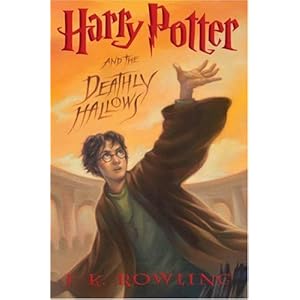
Are there lots of deaths? Yes. Powerful character revelations? Check. Controversial final scene? Yep. J.K. Rowling's modern fantasy epic concludes in typical fashion, but with a sense of grandeur and style the series is known for. And yes, while some hated the final scene, I have to admit I rather liked it.
6. Buffy The Vampire Slayer-"Chosen"
-----------------------

Although it is not the best episode of the series, "Chosen" ends Buffy in grand fashion with the battle for evil taking even greater stakes than ever before. Friends are lost in heart breaking sacrifice and at the same time preparing its series for a new step in its mythology and a eventually a new medium.
5. Serenity
-----------------------
 Whoa, another Joss Whedon show? Insanity! This movie conclusion to the short lived series easily earns its place on this list. In addition to wrapping up the majority of the mythology questions posed by the series. However, Serenity thrives in bringing about sometimes heart breaking character conclusions through action filled spectacle.
4. Lost: The End
-----------------------
Controversial and beloved at the time, the final episode of the epic television series Lost does not answer all the questions viewers posed about the show's intricate mythology. However, what it suceeds beautifully at is at creating some of the most satisfying and beautiful character resolutions ever seen. Plus there's that scene with the dog.
3. Star Wars: Return of the Jedi
-----------------------
Although it is still the worst of the original trilogy, Return of the Jedi is one hell of a series capper. The epic of Anakin Skywalker comes to an emotional and empactful close amongst epic spacebattles and slug like crime lords. The wordless finale also delivers a sense of galactic euphoria.
2. Watchmen
-----------------------

I may be cheating with this one. I mean Watchmen is a book right? Well before it was a book, Watchmen was a critically acclaimed miniseries. The bleak and atypical finale to the series not only subvert nearly every superhero cliche at the time, but creates a resolution that caps off a timeless series. It would also earn the series the label of being completely unfilmable for years.
1. Lord of the Rings: Return of the King (Film/Novel)
----------------------

Perhaps the greatest fantasy series ever created, The Lord of the Rings suceeds in both forms of media. It brings its quest to a climactic close with spectacular battles, blood thirsty creatures, and twists left and right. However, what makes the finale to this trilogy such a winner are its quiet moments. Especially in Peter Jackson's film adaptation this finale suceeds with its characters. Whether its the realization of Gimley and Legolas's friendship, Pippin singing to the steward of Gondor, or its great conclusion that remembers that there are more to endings than climactic battles, Return of the King is storytelling gold and the best series finale of all time.
Disclaimer: As always, this is limited to my own experience. If a reader out there wishes to recommend a series with a great finale, go ahead and place it in the comments below.
10. The Chronicles of Narnia: The Last Battle (novel)
-------------------------

Although its tone is decidedly more bleak than previous installments in C.S. Lewis's beloved franchise, the final novel in the series presents another Chrsitian parallel in its portrayel of the apocalypse. Characters are killed brutally, but in typical Lewis fashion returns in the final chapters. The Last Battle is a truly smart capper to a great series.
9. Ultimate Spider-man
------------------------
Although the series has yet to officially conclude, Brian Bendis has done tthe unthinkable, Peter Parker has died. Although death in comics is hardly permanent and main characters have been known to die, Marvel's Ultimate line is decidedly different. Only rarely do characters return from the grave and unlike the Marvel's main coninuity, writer Brian Bendis has complete control over how the series will play out from this point forward. Peter's death is handled with class and incredible emotion. It never feels like a gimmick.
8. Toy Story 3
------------------------
Last year, I doubt many of us would have expected to include this amoung the best series cappers of all time. However, Pixar's incredible third installment in the Toy Story series is just that. It not only stands on its own as a clever and inventive animated film, but delivers a poignant statement on mortality. It also delivers closure to characters we have come to love for over a decade.
7. Harry Potter and the Deathly Hallows (novel)
------------------------
Are there lots of deaths? Yes. Powerful character revelations? Check. Controversial final scene? Yep. J.K. Rowling's modern fantasy epic concludes in typical fashion, but with a sense of grandeur and style the series is known for. And yes, while some hated the final scene, I have to admit I rather liked it.
6. Buffy The Vampire Slayer-"Chosen"
-----------------------
Although it is not the best episode of the series, "Chosen" ends Buffy in grand fashion with the battle for evil taking even greater stakes than ever before. Friends are lost in heart breaking sacrifice and at the same time preparing its series for a new step in its mythology and a eventually a new medium.
5. Serenity
-----------------------
4. Lost: The End
-----------------------
Controversial and beloved at the time, the final episode of the epic television series Lost does not answer all the questions viewers posed about the show's intricate mythology. However, what it suceeds beautifully at is at creating some of the most satisfying and beautiful character resolutions ever seen. Plus there's that scene with the dog.
3. Star Wars: Return of the Jedi
-----------------------
Although it is still the worst of the original trilogy, Return of the Jedi is one hell of a series capper. The epic of Anakin Skywalker comes to an emotional and empactful close amongst epic spacebattles and slug like crime lords. The wordless finale also delivers a sense of galactic euphoria.
2. Watchmen
-----------------------
I may be cheating with this one. I mean Watchmen is a book right? Well before it was a book, Watchmen was a critically acclaimed miniseries. The bleak and atypical finale to the series not only subvert nearly every superhero cliche at the time, but creates a resolution that caps off a timeless series. It would also earn the series the label of being completely unfilmable for years.
1. Lord of the Rings: Return of the King (Film/Novel)
----------------------
Perhaps the greatest fantasy series ever created, The Lord of the Rings suceeds in both forms of media. It brings its quest to a climactic close with spectacular battles, blood thirsty creatures, and twists left and right. However, what makes the finale to this trilogy such a winner are its quiet moments. Especially in Peter Jackson's film adaptation this finale suceeds with its characters. Whether its the realization of Gimley and Legolas's friendship, Pippin singing to the steward of Gondor, or its great conclusion that remembers that there are more to endings than climactic battles, Return of the King is storytelling gold and the best series finale of all time.
Saturday, January 29, 2011
Star Wars: The Clone Wars: Witches of the Mist-Review
12:28 PM |
Posted by
Nick
Witches of the Mist, the conclusion to the three part Savage Opress storyline, at the moment stands as one of the most important episodes in the series to date. Regardless of quality, the story advances made in this episode will forever change the make up of the series.
Following the events in the previous two episodes, Dooku begins his training of Savage Opress. However, at the same time the effects of Savage’s previous attacks have not gone unnoticed by the Jedi, who dispatch Anakin and Obiwan to deal with the threat. As Savage is quickly being thrust into the forefront of the war Ventress begins to enact the final stages of her revenge.
As a finale to a three part arc Witches of the Mist succeeds. The majority of the plot points are brought to a relatively satisfying conclusion, and it delivers on the necessary action that the story demands. However, as mentioned earlier Mist is perhaps most significant in how it drives several key players for the series into completely new territory. It is not surprising at all to see that the main characters of this saga (Count Dooku, Assaj Ventress, Savage Opress, and Mother Talzin) all stand on different ground then they did where the story began. This in and of itself makes this episode a winner. The Clone Wars is a series where events are often frustratingly contained within an episode or arc. This is not the case with Mist as there is no simple way the series can continue to function as it once was after this episode has concluded.
Although the Jedi are included their roles are miniscule and in the end utterly unneeded. Once again Dooku, Savage, and Ventress steal the show. Savage continues to grow and involve as a memorable villain and again appears surprisingly layered. His training at the hands of Dooku stands as a stark parallel to Yoda’s teaching of Luke in the Empire Strikes Back and offers an interesting glimpse into both characters as well as Sith culture.
However, the moment fans had been waiting for since the arc began was the final three way showdown between Savage, Ventress, and Dooku. Brilliantly animated, orchestrated, and choreographed the sequence drips with tension and emotion more so then any battle since Anakin’s duel with Obiwan in Revenge of the Sith. It may actually stand as the single best action sequence the series has ever had.
The episode culminates in a haunting and emotional final sequence that not only hints at things to come, but drops perhaps one of the most unexpected and bold twists in the history of the franchise.
Also notable is the inclusion of Delta Squad from the fan favorite video game Republic Commando. Although their appearance bubbles down to little more than a cameo, their appearance is a healthy bit a fan service.
If it were not for the issues of pacing Witches of the Mist would stand as one of the top three episodes of the series. However, like the previous installments before it, Mist is just too large a story to contain in a twenty two minute episode. Like Monster, this installment manages to avoid feeling bloated except for one sequence at its midpoint that feels incredibly disjointed.
Score: -A
 Labels:
Cartoon Network,
Dave Filoni,
George Lucas,
Katie Lucas,
review,
Star Wars,
The Clone Wars,
TV
|
Labels:
Cartoon Network,
Dave Filoni,
George Lucas,
Katie Lucas,
review,
Star Wars,
The Clone Wars,
TV
|
 0
comments
0
comments
Star Wars: The Clone Wars: Nightsisters-Review
8:12 AM |
Posted by
Nick
The Clone Wars for its near three year run now has been a series of heroism. Even if recently that line has begun to blur, the clones, Jedi, and most importantly Anakin himself have stood as true heroes in the conflict that has consumed the galaxy. However, Clone Wars has really developed into a series that thrives off its villains. Cad Bane, Aurra Sing, or Assaj Ventress, the dark side has always been a scene stealer. Nightsistsers took a turn for the better in giving us our first villain centric episode, and a step away from the clumsy politics driven installments that were prevalent in the beginning of the season.
Nigthsisters picks up in the middle of a massive space battle, led by Dooku’s prized assassin Assaj Ventress. The Republic is on the run, and it appears that the Seperatists may pull off a surprise victory. However, the prowess of Ventress has drawn the attention of Darth Sidious. Worried that his apprentice may be growing too powerful, Sidious orders the death of Dooku’s apprentice, setting off a chain of events that could shape the face of the war.
The shift of focus in Nightsisters is its most apparent attribute. Although we are given glimpses of Obiwan and Anakin in the first act, the villains are the centerpiece here and for that reason alone this episode becomes a must watch.
As the title suggests Nightsisters introduces the Dathomir witches to the Star Wars G canon for the first time. Long time villains of the expanded universe, the inclusion of the Nightsisters is a welcome addition to the series. Although both Dathomir and the clan themselves have undergone some changes since their initial appearance in the Star Wars comic line, little damage appears to have been done to the overall continuity. Even a brief glimpse at Ventress’s origins stays relatively close to the already established backstory.
Earlier in the season, Ventress stole the show in the supposedly clone centric episode Arc Troopers. It seems only appropriate that here Ventress’s spotlight is stolen by her master Dooku. Although her ever present malice and violence is at its peak here, her motives and actions in Nightsisters are all too familiar. This cannot be said for the Count, who is more fascinating in this single episode then through the entirety of his roles in the Star Wars prequels. Early in the episode when Sidious orders Dooku to murder his assassin, a surprisingly human display of compassion breaks through and makes the dynamic between the two all the more powerful. The bearded Sith shines yet again at the episodes climax in a spectacularly choreographed lightsaber duel that outshines many of those in the live action films. Dooku fights with a strange finesse and elegance that is only hinted at in the films.
Despite all that works, Nightsisters has one major flaw and that is one of pacing. As seen in Assassin and to a lesser degree Arc Troopers, there is quiet simply too much going on this episode for its own good. When sitting back and examining the episode as a whole it is sometimes surprising at simply how much story has progressed within the space of twenty two minutes. While a fast paced storyline works, Nightsisters often feels clunky. The story that the writers and directors of this outing are trying to tell is just too grand in scope for the time frame they are given. Although writer Katie Lucas, daughter of the big man himself, does a stellar job at setting pieces into place for the following two outings not everything can be salvaged.
The animation and score continue to improve at an amazing rate. Characters are more vibrant and expressive now than they ever have been, and the action sequences are often breathtaking.
Overall, Nightsisters is a welcome change to the series. Exciting, colorful, and with heavy doses of dark side this stands as one of the better episodes of the series. Let’s just fix those pacing issues.
Score: B+
Labels:
Cartoon Network,
Dave Filoni,
George Lucas,
Katie Lucas,
review,
Star Wars,
The Clone Wars,
TV
|
0
comments
Sunday, December 19, 2010
Star Wars The Clone Wars: Pursuit of Peace-Review
5:57 PM |
Posted by
Nick
Portraying an all too familiar pattern, this episode of the Clone Wars once again represents a dip in quality. Despite following a stellar episode, Pursuit of Peace fails to achieve the political and emotional heights that it aims for.
After the terrorist attack on Coruscant, the Senate once again finds itself in a deadlock. The bill surrounding the expansion of the clone army still stands as an issue of hot debate, with Padme and her small band of political allies taking center stage. As she struggles to find support from the senate, Padme becomes the target of some rather unsavory individuals and comes face to face with just how dangerous politics can be.
Although the premise for Pursuit of Peace sounds promising, it fails to fully reach its potential. While the political issues surrounding the nature of the conflict are interesting and realistic, many of the other elements in this episode feel bizarrely off kilter. Padme is as frustrating as ever, her unshakeable idealism and peace loving ways become annoyingly unhuman and even irritating to watch. However, her interactions with the other senators are well handled and do offer some memorable moments.
Plot wise the oddest decision is the inclusion of the two mercenaries that target Padme and her supporters. While the episode would be devoid of any action if the two had not appeared, this may have actually been preferrable to the sloppy and poorly animated sequences we were given. Both villains are uncompelling, incompetent, and feel out of place. Perhaps most frustrating of all is an incredibly slow paced and unnecessary chase sequence that dominates the second act. Devoid of tension or good set peices, the chase drags even more then the politically charged scenes.
The dialogue in Pursuit of Peace also experiences a dip in quality. Bail Organa still stands as one of the more awkwardly handled characters in this series, and Padme's speech at the end feels too cliched to be effective.
Despite this, there is one very effective scene at the episodes end surrounding Palpatine. Its the best we've seen of this character during the course of the series, and the consistently stellar animation does much to heigthen the mood of this disturbing closer.
Overall, despite featuring some well handled political intrigue and a fantastic ending, Pursuit of Peace feels disingenous and cluttered. Further proof that this season must find its legs soon, or risk losing the fanbase it so readily one back last year.
Score C
Labels:
Cartoon Network,
Dave Filoni,
George Lucas,
Reviews,
Star Wars,
The Clone Wars,
TV
|
0
comments
Saturday, December 18, 2010
Star Wars The Clone Wars: Heroes on Both Sides-Review
9:02 PM |
Posted by
Nick
Despite issues surrounding the handling of political issues in the past, The Clone Wars took an incredible leap in the right direction in its stellar episode Heroes on Both Sides. Deliviring stellar animation, great character moments, and a story that actually makes a relavant statement about the nature of the Clone Wars, this episode easily stands as one of the best in the series.
Following recent losses in the Outer Rim seiges, the Republic finds itself in need of further clone troops to support the war effort. However, the already bankrupt system needs more funds in order for such troops to be created. This quickly becomes a point for debate, especially amongst the Trade Federation, Banking Clan, and Techno union who are dealing under the table with Separatist forces. Opposed to the entire idea of further troop development is the ever idealistic Padme Amidala. In a bid to escape from the increasingly volatile situation in the Senate, she along with Ahsoka make a covert trip to vist a friend of hers on the Separatist council. Meanwhile, Dooku has taken his own measures to make sure that the war between the two factions continues.
One of the most complex stories so far, the script for Heroes on Both Sides is surprisingly strong. Devoid of the bland and silly dialogue that often hampers this series, this surprisingly strong politically centered episode provides moments of incredibly poignancy and character. Padme's idealism feels genuine instead of annoyingly naive, and Ahsoka's lack of political understanding also creates for an interesting scenario. Raised in a society already at war, Ahsoka, like many of the younger viewers of the show, does not fully understand the political realities behind the conflict. Her character growth over the course of this outing is well written and suits both the character and the series.
The politics in this episode are also handled well. In the past when The Clone Wars has attempted to use politics as the basis for an episode it has often fallen on its face. This time Heroes on Both Sides creates an intriguing economic issue that is littered with good character moments. Most importantly is the fact that the series finally realizes that the Confederacy is not simply an army of machines, but a political system with people and citizens of its own. Add in an effective and violent final act that plays on current fears of domestic terrorism and you have a well detailed and fleshed out plot.
This episode is also noteworthy for its impressive visual design. The scenes of a post attack Coruscant are shockingly realistic and create the feel for a war time atmosphere. Most breathtaking are views of the Separatist world Raxus, which is the most artistic planet design to date.
Also worthy of note is that this episode stands out as being the first to feature new character desings for Anakin, Obiwan, and Ahsoka. Refitted with outfits more fitting maturing characters, its a clever reminder by the crew that we are moving towards an inevitable endgame.
Perhaps the only down points on Heroes on Both Sides are two jarringly awkward moments surrounding the terrorist side plot. There is a scene where Grievous adresses his droid servants as if they were real soldiers. The nature of this scene and the way it is executed feel incredibly out of place and awkward. Later, the suicide droids attack a facility of maitenance workers before completing their mission. While overall an effective scene, it is bizarre to see that all of the workers have the same character model. This has never been an issue before in the series. Even the clones have distinct characteristics and details that make them individuals. This makes this design oversight seem incredibly lazy and disappointing.
Overall, Heroes on Both Sides delivers one of the best episodes of the entire series with stellar animation and an impressive script.
Score: -A
Labels:
Cartoon Network,
e Filoni,
George Lucas,
review,
Star Wars,
The Clone WarsCartoon Network,
TV
|
0
comments
Saturday, November 13, 2010
Star Wars The Clone Wars: Hunt for Ziro-Review
8:07 PM |
Posted by
Nick
Following up on last week's terrible outing, The Clone Wars was already on shaky ground. With a third season that was slowly looking to be a disappointment, Hunt for Ziro had a lot to prove, and not a whole lot of time to do it. Fortunately, this week's outing, while flawed, is a vast improvement over the past several weeks.
Acting as a sequel to the season one finale, Hostage Crisis, follows Quinlon Vos and Obiwan Kenobi as they attempt to track down Cad Bane and the escaped crimelord Ziro the Hutt. Meanwhile, Ziro has hit his own problems with the Hutt Council, who have grown tired of the arrogant Hutt's shenanigans. To make things worse, his old flame Sy Snootles has reappeared.
Like Evil Plans, Hunt for Ziro focuses on some of the more irregular aspects of the Star Wars mythos. However unlike last weeks travesty, everything here seems to fit. Although Snootles may be a strange character, she already exists within the universe (see Return of the Jedi) and her role actually fit this story. The Hutt's being gangsters demand entertainment, so Snootles and her dancers make for welcome editions to the show. Not to mention that her character also takes a decidedly dark tone towards the episodes end. Even Ziro, a character I've been routinely opposed to since the shows inception, felt natural in this episode. The same cannot be said for Ziro's mother, who makes a rather poorly executed comedic appearance at the end of the second act.
Quinlon Vos also makes is Clone Wars debut in this episode. Originally introduced in the Dark Horse Star Wars: Republic comic series, Vos is one of the most well liked expanded universe characters ever imagined. While his character in this episode may disappoint some fans, it can be said that the Vos in Clone Wars is faithful to that in the comics. Any disappointment may simply come from the fact that he simply is not given much to do. This episode, at its worst is simply overcrowded. Not only do we follow Ziro and Snoodles, but we have Vos, Kenobi, and Cad Bane as well. While the script miraculously manages to sustain itself, it does feel cluttered and rushed at times.
The animation throughout Hunt for Ziro is superb. All the character models are fluid and detailed, and the environments, especially Nal Hutta, are incredibly atmospheric.
Much can also be said about the fantastic action sequence between Cad Bane, Quinlon Vos, and Obi-wan Kenobi. Based on the rocky jungle world of Teth, the multi-character duel is continuously inventive and well choreographed. The end result is one of the best sequences in the series.
Overall, Hunt for Ziro is a welcome improvement in this season of The Clone Wars. With interesting characters, a well scripted plot, and some great action scenes, it quickly becomes a memorable outing, even if you have to sort through some clutter and strangeness to get there.
Score: B
Wednesday, November 10, 2010
Lucasfilm Announces Special Clone Wars Screening
5:57 PM |
Posted by
Nick
Despite the mixed opinions regarding the Star Wars prequel trilogy, there is one fact that is stands undisputed among fans: Darth Maul is awesome. Which is why the announcement that the Star Wars animated series The Clone Wars would explore this character and his close relative Savage Opress became one of the most talked about announcements of the summer.
Following a string of less then stellar episodes, Lucasfilm plans to return with a bang January 7th with the premiere of the first installment in a multi-part examining the character. However, certain lucky fans will have the pleasure of viewing these episodes early. On December 8th, Lucasfilm will hold free screenings of the arc throughout the country. Check Star Wars.com for the details.
Friday, November 5, 2010
Star Wars The Clone Wars: Evil Plans-Review
7:32 PM |
Posted by
Nick
Despite the quality of the previous installment of The Clone Wars, Evil Plans may be one of the worst episodes of the show ever produced.
The plot of the episode follows C-3P0 and his trust companion R2D2 as they struggle to find supplies for a party being planned by Padme Amidala. Meanwhile, the bounty hunter Cad Bane hunts the two to gain the schematics for the senate building.
This episode made the bizarre choice of acting as a prequel to the season one finale Hostage Crisis. While Hostage Crisis was a generally well liked episode, the fact that it could possibly warrant a prequel is absurd. The episode was incredibly self explanatory and lacked any true need for further exploration of the plot.
The plot itself feels incredibly unnecessary, and this is compounded by the fact that nothing substantial happens in the episode. There are no interesting action set peices, no unique characterization, and little long term plot development. Cad Bane recovers his plans, which comes as no surprise to the audience. At the end our heroes are whiped of memory of the entire incident so any character development is lost. The only interseting development is a talk between Jabba the Hutt and his bretheren regarding their wayward brother Ziro. This comes off as interesting as Ziro has always stood as an odd inclusion to the Star Wars mythos, and this may lead the end of his inclusion in the series.
Perhaps the most asinine and annoying sub plot developed in this episode is the inclusion of a droid spa. Yes. A droid spa. Its as stupid as it sounds. Obviously created as a type of poorly conceived gag R2D2 goes through a spa treatment that serves absolutely nothing to the episode as a whole. Humor is welcome, and even whole episodes focusing on the more light hearted aspects of Star Wars are apprecaited. However, back dropped with a darker plot and executed to the poorest degree does nothing but hurt the series as a whole.
The only two real plusses to this episode are the continually stellar animation and Anthony Daniels portrayel of 3P0. Despite the chaos and terrible scripting, 3P0 comes off as the only thing in this episode that actually seems to work. Daniels has spent decades playing this character and he continues to feel genuine.
Overall though this is an incredible disappointment and a low mark for the series as a whole.
Score D+
Star Wars The Clone Wars: "Assassin" -Review
7:15 PM |
Posted by
Nick
From the start Assassin was a risk of an episode. Centering around two fan favorite characters, a plot point that has been touchy for fans, and fighting against the series's own continuity the episode seemed like an almost impossible feet to handle correctly. Surprisingly, The Clone Wars team tackled this task spectacularly. Despite its flaws, Assassin ends up being one of the series's better episodes.
Picking up shortly after last weeks Academy, Ahsoka returns to Coruscant to discuss her recent mission tracking down the dangerous bounty hunter Aurra Sing. With Sing believed to be dead the council has moved on to more pressing matters, however the Force seems to have other plans for the fledgeling padawan. Ahsoka begins to have horrific dreams featuring the deadly mercenary attacking someone close to her. Lost and faced with an incredible danger, Ahsoka must rise to the challenge to rescue a life.
Once again Ahsoka stars. The series has really hit its stride when crafting a believable and genuine pathos for the young girl that was originally universally hated by fans. Ahsoka's struggle with her new found responsibility and powers are handled skillfully delivering the necessary confusion and emotion.
The Clone Wars continues its trend of featuring incredible villains. Whether it be Cad Bane, Asajj Ventress, or General Grievous the dark side shines strong in this series. Aurra Sing is also a scene stealer. Originally making her mark in last season's Boba Fett mark, Sing acts a sinister and even maniacal foil the heroes.
Perhaps the most noticeable flaw in this episode is the noticeable lack of tension. While the fate of Ahsoka remains a mystery to fans of the series, the subject of Sing's assassination attempt is known by fans and the general public to survive to a much later date. This robs the episode, which relies heavily on doubt, of much needed tension.
It also at times feels as if Assassin is simply complex for a half hour episode. Ideas are sometimes glossed over or addressed inadequitly, especially towards the end of the episode.
Even more frustrating is the hole this episode creates in the continuity. The events surrounding the conclusion to the assisination conspiracy put several earlier episodes in the series at a far later date then originally suspected, throwing into question numerous other plot points as well.
Assassin is beautifully animated. The environments are memorable and atmospheric, the characters feel genuine, and the action is frantic and exciting.
Overall, Assassin is an exciting, if flawed, return to The Clone Wars fans have come to love. Now if we could only solve those continuity issues.
Score: B+
Star Wars The Clone Wars: "The Academy"-Review
7:03 PM |
Posted by
Nick
After the previous weeks lackluster Corruption the announcement that The Academy would act as a sequel to the much dislike episode was met with some initial dislike by fans of the series. Luckily, The Academy returns the series to where it needs to be.
Following the events regarding the tea smuggling ring, Satine requests help from the Jedi Council. With Jedi spread thin across the galaxy, padawan Ahsoka Thano arrives to help with the increasing corruption on the planet. Ahsoka begins educating some of the planets youth on the dangers of unpure politics, which ultimately leads to discovery of a deeper conspiracy then originally suspected.
Despite the fact that the episode follows never before seen characters, children in fact, it is surprising that The Academy works as well as it does. Unlike previous episodes, the plight of the characters is understandable and even relatable. Ahsoka once again steals the show acting as incredible mentor and teacher. All together she feels incredibly far removed from the head strong and rash Togruta we met at the beginning of the series.
The cast of children, including Satine's nephew, also work well. Their character's are surprisingly interesting and fit easier into the story line then other walk on roles like Baron Papanoida. However, their character models often feel awkward, and lack the fluid animation seen by most of the animated cast.
While once again lacking in action, The Academy's plot moves forward with surprising pace without ever feeling rushed. It's only issues come with predictability. The resolution to the mystery is painfully obvious even to the youngest viewers and robs the final revelation of any surprise or shock. The ending to the conflict also feels incredibly anti climactic and disappointing.
Despite its flaws, The Academy is a welcome return to a series that seems to be quickly losing its footing. While it is nowhere near as strong as the season's stellar premiere episodes, its strengths far out weigh its faults.
Score:B
Star Wars The Clone Wars: Corruption-Review
6:49 PM |
Posted by
Nick
The Clone Wars continued its slump this week in the lackluster political conspiracy centered episode, Corruption.
Mandalore has fallen into debt. Standing as a neutral system in the growing war between the Republic and the Confederacy, the planet has found itself without trade and falling into a deep lack of supplies. Hoping to assist in this matter, Padme Amidala arrives to assist Ducchess Satine of Mandalore. Meanwhile, a group of black market criminals smuggle supplies into the planet.
Once again, this episode suffers from poor handling of an interesting scenario. The political aspect of the war is once again given attention, which while welcome feels tired after three weeks of similar material. By this point the audience has become tired of watching a series centered around trade dealings and political conspiracies. While these plots can be interesting, the episode must deliver on well executed characters dialogue and set peices. Unfortunatley, Corruption fails to do so.
The subject of the conspiracy in this episode seems incredibly out of place. When there are dozens of battles being fought across the galaxy, why is it that the audience is relegated to watching a story line that essentially follows a bunch of aliens poisoning tea.
Perhaps the strangest aspect of this episode is its portrayel of Duchess Satine. Satine made an incredible impression in the original three episode Mandalore arc in season 2. A well written and intriguing character, Satine's pacifist values and her past with Obiwan Kenobi made her a fan favorite. In this episode the Satine we follow seems like a different person. Here behavior, especially for a pacifist, seems incredibly rash and even brutal. This sudden change in character is attributed to the stressing situation seen in Mandalore, but even then Satine seems to behaving irrationaly, something that has left numerous fans confused and even angry.
However, the animation in this episode is particularly superb. Characters are now incredibly vibrant and fluid in movement, and Mandalore is a beautiful location. There is also a creative and well realized action sequence.
These do little to alleviate an overall lackluster installment to the series in an increasingly disappointing third season.
Score: C
Star Wars The Clone Wars: "Sphere of Influence"-Review
6:30 PM |
Posted by
Nick
This episode marked the beginning of a span of espionage based episodes in this season. While I have long waited for a more political Clone Wars episode, Sphere of Influence continues Supply Lines trend of mediocrity.
The episode follows the the chairman of Pantora Baron Papanoida's attempts to recover his missing daughters, who have been kidnapped by a group of Seperatist criminals. Meanwhile, Ashoka Thano and her close friend senator Riyo Chuchi attempt to negotiate with the Trade Federation's blockade of Pantora.
While the premise for Sphere of Influence is novel and features plenty of espionage and political maneuvering, the pacing for the episode seems surprisingly lacking. Papanoida's investigation and search for his children lack necessary tension, primarily because he is relative unknown to even the most avid Star Wars fan. The audience simply just doesn't have much stake in whether the good natured politician recovers his family or not. Even a guest voice spot by Seth Green and cameo by fan favorite Embo does little to elevate this episode above mediocrity.
The plot following Ahshoka and Tuchi fairs much better. While their friendship is a new development that has never been mentioned before this point, the two have an interesting dynamic and allows for some good development towards Ahsoka's character. Ahsoka in general has grown to become one of the best aspects of the show.
Perhaps the strangest aspect is the inclusion of Greedo. Yes, the Rodian bounty hunter from the original film makes an appearance in this episode. He does little for the plot of this episode and his entire role feels like a poorly handed peice of fan service.
This episode also lacking in the action department. While this is sometimes handled well like in Season Two's Senate Spy , this only adds the lack of tension present in the mainplot. However, a quick shootout in a familiar cantina does much for the episode visually.
Despite the obvious issues with Sphere of Influence, the episode is not a terrible one. It just simply lacks the flare and character that have the audience has become accostomed to.
Score: C+
Subscribe to:
Posts (Atom)