Artificial Continuum

Showing posts with label review. Show all posts
Showing posts with label review. Show all posts
Friday, September 16, 2011
 Star Wars: The Clone Wars-"Gungan Attack" Review
 7:07 PM |
  Posted by
Nick
Posted by
Nick
The Battle of Mon Cala/Dac/Mon Calamari continues in the second half the fourth season opener of The Clone Wars with a jump in quality but with the reappearance of old problems.
After the overwhelming loss in the previous episode, the survivors are on the run from the ever persistent Quarren and Separatist forces. Lee-Char is doubting his abilities as a leader more now than ever and even the help of Ahsoka and Ackbar can't seem to help him step up to the role of leader his people need. Meanwhile, Master Yoda approaches an old ally for assistance in the battle and the Separatist's prepare for a final assault to kill the last lines of the Mon Calamari defense.
As the second episode of a three part arc, "Gungan Attack" suffers from much of the same problems as "Water War" but improves due to a better sense of direction and character.
"Gungan Attack" throughout conveys a sense of urgency. Our heroes are stranded and separated and are faced with seemingly impossible odds. Like last year's "Counterattack" (one of my personal favorites), this episode follows a small band of heroes attempting, mostly fruitlessly, to avoid the clutches of a diabolical enemy commander and waves of enemies. Its interesting to see a battle go so utterly against the Republic's favor, which is something we have yet to see in the series.
Tamson is ,again, a scene-stealer. Although not as brutal as he appeared in the episode prior, the shark-like commander continues to manipulate both the Quarren and Mon Calamari to benefit himself. The plot line is interesting and is a welcome distraction from Lee Char's floundering attempts at leadership. The fact that Tamson is paired with a sympathetic and honorable Quarren leader makes the entire political web of this arc all the more engaging.
The inclusion of the Gungan army comes as a surprising (well, relatively given the title of the episode) and bizarre twist. Their inclusion seems rushed and almost haphazard, and this continues to their inclusion in the battle itself. Jar Jar makes his return and again he injects an otherwise serious episode with unneeded and jarring slapstick.
For the most part the action in "Gungan Attack" is far more focused and visceral. The big scale battles have passed in favor of guerilla warfare, and the latter lends itself better to the underwater setting. The climax for the episode features an inventive sequence that involves a great fight scene between Tamson and Jedi Master Kit Fisto, who plays a far more pivotal role here than in "Water War".
Again, the animation is beautiful. The world of Mon Cala is vibrant and the animation team again succeeds at creating realistic water effects. Subtle touches such as muffled explosions and floating corpses help to create a unique visual flair to the episode that make it a unique viewing experience.
As for those returning problems? Well, Lee-Char is still frustrating and poorly voiced, the terms of war are still confusing, and the large scale battles are still poorly executed. Outside that, "Gungan Attack" represents an improvement for the arc and leaves it open for an even stronger installment next week.
Score: B
Star Wars: The Clone Wars-"Water War" Review
6:23 PM |
Posted by
Nick
Season Four is upon us and The Clone Wars promises to give us one action packed season beginning with a three part underwater battle on the series famous planet of Dac/Mon Calomari/Mon Cala (whatever).
The world of Mon Cala is in a state of crisis. Its long time leader, a Mon Calomari king, has been assassinated and in his death leaves a power struggle between the two native races the Quarren and Mon Calomari. The current prince, the young Lee-Char, is next in line for the throne, something the Quarren aren't particularly happy about. Due to the manipulation of the Separatist ambassador Riff Tamson the Quarren are soon swayed the enemy side and the planet is plunged into civil war.
"Water War" like numerous episodes of Clone Wars presents an interesting premise and great visuals but struggles over execution and muddy dialogue.
The episode's beginning is chaotic and even with the typical "Clone Wars Intro" sequence what exactly is going on takes a few seconds to piece together. This may be in the fact that it doesn't really make sense why the Quarren care so much about the death of a Mon Calomari king. The races have always been portrayed in the past as two separate entities previously in the Expanded Universe. If this has been retconned then while unfortunate, it would have been nice to have a better understanding of what exactly the state of the planet is.
The character arc for this series of episodes appears to focus around Lee-Char, who is a hard character to adjust to. He is portrayed as a naive and childlike leader, which in itself is okay. Lee-Char just suffers as a character from hackneyed dialogue and a less than stellar voice actor. Thankfully, he is paired alongside Captain Ackbar (the earlier incarnation of the famous fish headed alien from Return of the Jedi). Ackbar's portrayal is both refreshing and true to the original film and its great to see him take a lead role in this episode.
Riff Tamson is a welcome addition to the Star Wars universe. His political aspirations are ambitious, and some might say cliched, but he makes up for that in visual style and sheer brutality. He alone carries some scenes above the mediocrity that tends to grip this episode. During the inevitable battle, Tamson rips and tears his ways through enemies with animal-like brutality and its a gory wonder to behold. His manipulation of the Quarren people is also an interesting plot line as it helps to emphasize the grey areas of the show's political storyline.
Visually, the episode is a wonder. Underwater effects are given beautiful levels of depth and feel as realistic as a Star Wars world can be. Characters float, swim, and charge through liquid with incredible fluidity that has never been matched on the show until this point.
However, something has to be said about how non-compelling the large scale battles in this episode are. While the sheer scale of them are sometimes a fun visual treat, they lack the punch that episodes like "Landing at Point Rain" or "Arc Tropers" brought. This is primarily due to the underwater set piece. Characters are slowed down considerably and underwater fire fights are actually less exciting than they sound. This could have been avoided with clever choreography and camera work, but outside some close up action scenes (mostly involving Tamson) there is little to be impressed by.
Overall, "Water War" is an above average episode of the series. While boasting some interesting characters and great visuals, it is eventually weighed down by its uneven plot, frustrating main character, and disappointing battle scenes that prevent it from reaching its potential.
Score: -B
Saturday, January 29, 2011
Star Wars: The Clone Wars: Witches of the Mist-Review
12:28 PM |
Posted by
Nick
Witches of the Mist, the conclusion to the three part Savage Opress storyline, at the moment stands as one of the most important episodes in the series to date. Regardless of quality, the story advances made in this episode will forever change the make up of the series.
Following the events in the previous two episodes, Dooku begins his training of Savage Opress. However, at the same time the effects of Savage’s previous attacks have not gone unnoticed by the Jedi, who dispatch Anakin and Obiwan to deal with the threat. As Savage is quickly being thrust into the forefront of the war Ventress begins to enact the final stages of her revenge.
As a finale to a three part arc Witches of the Mist succeeds. The majority of the plot points are brought to a relatively satisfying conclusion, and it delivers on the necessary action that the story demands. However, as mentioned earlier Mist is perhaps most significant in how it drives several key players for the series into completely new territory. It is not surprising at all to see that the main characters of this saga (Count Dooku, Assaj Ventress, Savage Opress, and Mother Talzin) all stand on different ground then they did where the story began. This in and of itself makes this episode a winner. The Clone Wars is a series where events are often frustratingly contained within an episode or arc. This is not the case with Mist as there is no simple way the series can continue to function as it once was after this episode has concluded.
Although the Jedi are included their roles are miniscule and in the end utterly unneeded. Once again Dooku, Savage, and Ventress steal the show. Savage continues to grow and involve as a memorable villain and again appears surprisingly layered. His training at the hands of Dooku stands as a stark parallel to Yoda’s teaching of Luke in the Empire Strikes Back and offers an interesting glimpse into both characters as well as Sith culture.
However, the moment fans had been waiting for since the arc began was the final three way showdown between Savage, Ventress, and Dooku. Brilliantly animated, orchestrated, and choreographed the sequence drips with tension and emotion more so then any battle since Anakin’s duel with Obiwan in Revenge of the Sith. It may actually stand as the single best action sequence the series has ever had.
The episode culminates in a haunting and emotional final sequence that not only hints at things to come, but drops perhaps one of the most unexpected and bold twists in the history of the franchise.
Also notable is the inclusion of Delta Squad from the fan favorite video game Republic Commando. Although their appearance bubbles down to little more than a cameo, their appearance is a healthy bit a fan service.
If it were not for the issues of pacing Witches of the Mist would stand as one of the top three episodes of the series. However, like the previous installments before it, Mist is just too large a story to contain in a twenty two minute episode. Like Monster, this installment manages to avoid feeling bloated except for one sequence at its midpoint that feels incredibly disjointed.
Score: -A
 Labels:
Cartoon Network,
Dave Filoni,
George Lucas,
Katie Lucas,
review,
Star Wars,
The Clone Wars,
TV
|
Labels:
Cartoon Network,
Dave Filoni,
George Lucas,
Katie Lucas,
review,
Star Wars,
The Clone Wars,
TV
|
 0
comments
0
comments
Star Wars: The Clone Wars: Nightsisters-Review
8:12 AM |
Posted by
Nick
The Clone Wars for its near three year run now has been a series of heroism. Even if recently that line has begun to blur, the clones, Jedi, and most importantly Anakin himself have stood as true heroes in the conflict that has consumed the galaxy. However, Clone Wars has really developed into a series that thrives off its villains. Cad Bane, Aurra Sing, or Assaj Ventress, the dark side has always been a scene stealer. Nightsistsers took a turn for the better in giving us our first villain centric episode, and a step away from the clumsy politics driven installments that were prevalent in the beginning of the season.
Nigthsisters picks up in the middle of a massive space battle, led by Dooku’s prized assassin Assaj Ventress. The Republic is on the run, and it appears that the Seperatists may pull off a surprise victory. However, the prowess of Ventress has drawn the attention of Darth Sidious. Worried that his apprentice may be growing too powerful, Sidious orders the death of Dooku’s apprentice, setting off a chain of events that could shape the face of the war.
The shift of focus in Nightsisters is its most apparent attribute. Although we are given glimpses of Obiwan and Anakin in the first act, the villains are the centerpiece here and for that reason alone this episode becomes a must watch.
As the title suggests Nightsisters introduces the Dathomir witches to the Star Wars G canon for the first time. Long time villains of the expanded universe, the inclusion of the Nightsisters is a welcome addition to the series. Although both Dathomir and the clan themselves have undergone some changes since their initial appearance in the Star Wars comic line, little damage appears to have been done to the overall continuity. Even a brief glimpse at Ventress’s origins stays relatively close to the already established backstory.
Earlier in the season, Ventress stole the show in the supposedly clone centric episode Arc Troopers. It seems only appropriate that here Ventress’s spotlight is stolen by her master Dooku. Although her ever present malice and violence is at its peak here, her motives and actions in Nightsisters are all too familiar. This cannot be said for the Count, who is more fascinating in this single episode then through the entirety of his roles in the Star Wars prequels. Early in the episode when Sidious orders Dooku to murder his assassin, a surprisingly human display of compassion breaks through and makes the dynamic between the two all the more powerful. The bearded Sith shines yet again at the episodes climax in a spectacularly choreographed lightsaber duel that outshines many of those in the live action films. Dooku fights with a strange finesse and elegance that is only hinted at in the films.
Despite all that works, Nightsisters has one major flaw and that is one of pacing. As seen in Assassin and to a lesser degree Arc Troopers, there is quiet simply too much going on this episode for its own good. When sitting back and examining the episode as a whole it is sometimes surprising at simply how much story has progressed within the space of twenty two minutes. While a fast paced storyline works, Nightsisters often feels clunky. The story that the writers and directors of this outing are trying to tell is just too grand in scope for the time frame they are given. Although writer Katie Lucas, daughter of the big man himself, does a stellar job at setting pieces into place for the following two outings not everything can be salvaged.
The animation and score continue to improve at an amazing rate. Characters are more vibrant and expressive now than they ever have been, and the action sequences are often breathtaking.
Overall, Nightsisters is a welcome change to the series. Exciting, colorful, and with heavy doses of dark side this stands as one of the better episodes of the series. Let’s just fix those pacing issues.
Score: B+
Labels:
Cartoon Network,
Dave Filoni,
George Lucas,
Katie Lucas,
review,
Star Wars,
The Clone Wars,
TV
|
0
comments
Saturday, December 18, 2010
Star Wars The Clone Wars: Heroes on Both Sides-Review
9:02 PM |
Posted by
Nick
Despite issues surrounding the handling of political issues in the past, The Clone Wars took an incredible leap in the right direction in its stellar episode Heroes on Both Sides. Deliviring stellar animation, great character moments, and a story that actually makes a relavant statement about the nature of the Clone Wars, this episode easily stands as one of the best in the series.
Following recent losses in the Outer Rim seiges, the Republic finds itself in need of further clone troops to support the war effort. However, the already bankrupt system needs more funds in order for such troops to be created. This quickly becomes a point for debate, especially amongst the Trade Federation, Banking Clan, and Techno union who are dealing under the table with Separatist forces. Opposed to the entire idea of further troop development is the ever idealistic Padme Amidala. In a bid to escape from the increasingly volatile situation in the Senate, she along with Ahsoka make a covert trip to vist a friend of hers on the Separatist council. Meanwhile, Dooku has taken his own measures to make sure that the war between the two factions continues.
One of the most complex stories so far, the script for Heroes on Both Sides is surprisingly strong. Devoid of the bland and silly dialogue that often hampers this series, this surprisingly strong politically centered episode provides moments of incredibly poignancy and character. Padme's idealism feels genuine instead of annoyingly naive, and Ahsoka's lack of political understanding also creates for an interesting scenario. Raised in a society already at war, Ahsoka, like many of the younger viewers of the show, does not fully understand the political realities behind the conflict. Her character growth over the course of this outing is well written and suits both the character and the series.
The politics in this episode are also handled well. In the past when The Clone Wars has attempted to use politics as the basis for an episode it has often fallen on its face. This time Heroes on Both Sides creates an intriguing economic issue that is littered with good character moments. Most importantly is the fact that the series finally realizes that the Confederacy is not simply an army of machines, but a political system with people and citizens of its own. Add in an effective and violent final act that plays on current fears of domestic terrorism and you have a well detailed and fleshed out plot.
This episode is also noteworthy for its impressive visual design. The scenes of a post attack Coruscant are shockingly realistic and create the feel for a war time atmosphere. Most breathtaking are views of the Separatist world Raxus, which is the most artistic planet design to date.
Also worthy of note is that this episode stands out as being the first to feature new character desings for Anakin, Obiwan, and Ahsoka. Refitted with outfits more fitting maturing characters, its a clever reminder by the crew that we are moving towards an inevitable endgame.
Perhaps the only down points on Heroes on Both Sides are two jarringly awkward moments surrounding the terrorist side plot. There is a scene where Grievous adresses his droid servants as if they were real soldiers. The nature of this scene and the way it is executed feel incredibly out of place and awkward. Later, the suicide droids attack a facility of maitenance workers before completing their mission. While overall an effective scene, it is bizarre to see that all of the workers have the same character model. This has never been an issue before in the series. Even the clones have distinct characteristics and details that make them individuals. This makes this design oversight seem incredibly lazy and disappointing.
Overall, Heroes on Both Sides delivers one of the best episodes of the entire series with stellar animation and an impressive script.
Score: -A
Labels:
Cartoon Network,
e Filoni,
George Lucas,
review,
Star Wars,
The Clone WarsCartoon Network,
TV
|
0
comments
Saturday, November 13, 2010
Star Wars The Clone Wars: Hunt for Ziro-Review
8:07 PM |
Posted by
Nick
Following up on last week's terrible outing, The Clone Wars was already on shaky ground. With a third season that was slowly looking to be a disappointment, Hunt for Ziro had a lot to prove, and not a whole lot of time to do it. Fortunately, this week's outing, while flawed, is a vast improvement over the past several weeks.
Acting as a sequel to the season one finale, Hostage Crisis, follows Quinlon Vos and Obiwan Kenobi as they attempt to track down Cad Bane and the escaped crimelord Ziro the Hutt. Meanwhile, Ziro has hit his own problems with the Hutt Council, who have grown tired of the arrogant Hutt's shenanigans. To make things worse, his old flame Sy Snootles has reappeared.
Like Evil Plans, Hunt for Ziro focuses on some of the more irregular aspects of the Star Wars mythos. However unlike last weeks travesty, everything here seems to fit. Although Snootles may be a strange character, she already exists within the universe (see Return of the Jedi) and her role actually fit this story. The Hutt's being gangsters demand entertainment, so Snootles and her dancers make for welcome editions to the show. Not to mention that her character also takes a decidedly dark tone towards the episodes end. Even Ziro, a character I've been routinely opposed to since the shows inception, felt natural in this episode. The same cannot be said for Ziro's mother, who makes a rather poorly executed comedic appearance at the end of the second act.
Quinlon Vos also makes is Clone Wars debut in this episode. Originally introduced in the Dark Horse Star Wars: Republic comic series, Vos is one of the most well liked expanded universe characters ever imagined. While his character in this episode may disappoint some fans, it can be said that the Vos in Clone Wars is faithful to that in the comics. Any disappointment may simply come from the fact that he simply is not given much to do. This episode, at its worst is simply overcrowded. Not only do we follow Ziro and Snoodles, but we have Vos, Kenobi, and Cad Bane as well. While the script miraculously manages to sustain itself, it does feel cluttered and rushed at times.
The animation throughout Hunt for Ziro is superb. All the character models are fluid and detailed, and the environments, especially Nal Hutta, are incredibly atmospheric.
Much can also be said about the fantastic action sequence between Cad Bane, Quinlon Vos, and Obi-wan Kenobi. Based on the rocky jungle world of Teth, the multi-character duel is continuously inventive and well choreographed. The end result is one of the best sequences in the series.
Overall, Hunt for Ziro is a welcome improvement in this season of The Clone Wars. With interesting characters, a well scripted plot, and some great action scenes, it quickly becomes a memorable outing, even if you have to sort through some clutter and strangeness to get there.
Score: B
Friday, November 5, 2010
Star Wars The Clone Wars: "Assassin" -Review
7:15 PM |
Posted by
Nick
From the start Assassin was a risk of an episode. Centering around two fan favorite characters, a plot point that has been touchy for fans, and fighting against the series's own continuity the episode seemed like an almost impossible feet to handle correctly. Surprisingly, The Clone Wars team tackled this task spectacularly. Despite its flaws, Assassin ends up being one of the series's better episodes.
Picking up shortly after last weeks Academy, Ahsoka returns to Coruscant to discuss her recent mission tracking down the dangerous bounty hunter Aurra Sing. With Sing believed to be dead the council has moved on to more pressing matters, however the Force seems to have other plans for the fledgeling padawan. Ahsoka begins to have horrific dreams featuring the deadly mercenary attacking someone close to her. Lost and faced with an incredible danger, Ahsoka must rise to the challenge to rescue a life.
Once again Ahsoka stars. The series has really hit its stride when crafting a believable and genuine pathos for the young girl that was originally universally hated by fans. Ahsoka's struggle with her new found responsibility and powers are handled skillfully delivering the necessary confusion and emotion.
The Clone Wars continues its trend of featuring incredible villains. Whether it be Cad Bane, Asajj Ventress, or General Grievous the dark side shines strong in this series. Aurra Sing is also a scene stealer. Originally making her mark in last season's Boba Fett mark, Sing acts a sinister and even maniacal foil the heroes.
Perhaps the most noticeable flaw in this episode is the noticeable lack of tension. While the fate of Ahsoka remains a mystery to fans of the series, the subject of Sing's assassination attempt is known by fans and the general public to survive to a much later date. This robs the episode, which relies heavily on doubt, of much needed tension.
It also at times feels as if Assassin is simply complex for a half hour episode. Ideas are sometimes glossed over or addressed inadequitly, especially towards the end of the episode.
Even more frustrating is the hole this episode creates in the continuity. The events surrounding the conclusion to the assisination conspiracy put several earlier episodes in the series at a far later date then originally suspected, throwing into question numerous other plot points as well.
Assassin is beautifully animated. The environments are memorable and atmospheric, the characters feel genuine, and the action is frantic and exciting.
Overall, Assassin is an exciting, if flawed, return to The Clone Wars fans have come to love. Now if we could only solve those continuity issues.
Score: B+
Star Wars The Clone Wars: "The Academy"-Review
7:03 PM |
Posted by
Nick
After the previous weeks lackluster Corruption the announcement that The Academy would act as a sequel to the much dislike episode was met with some initial dislike by fans of the series. Luckily, The Academy returns the series to where it needs to be.
Following the events regarding the tea smuggling ring, Satine requests help from the Jedi Council. With Jedi spread thin across the galaxy, padawan Ahsoka Thano arrives to help with the increasing corruption on the planet. Ahsoka begins educating some of the planets youth on the dangers of unpure politics, which ultimately leads to discovery of a deeper conspiracy then originally suspected.
Despite the fact that the episode follows never before seen characters, children in fact, it is surprising that The Academy works as well as it does. Unlike previous episodes, the plight of the characters is understandable and even relatable. Ahsoka once again steals the show acting as incredible mentor and teacher. All together she feels incredibly far removed from the head strong and rash Togruta we met at the beginning of the series.
The cast of children, including Satine's nephew, also work well. Their character's are surprisingly interesting and fit easier into the story line then other walk on roles like Baron Papanoida. However, their character models often feel awkward, and lack the fluid animation seen by most of the animated cast.
While once again lacking in action, The Academy's plot moves forward with surprising pace without ever feeling rushed. It's only issues come with predictability. The resolution to the mystery is painfully obvious even to the youngest viewers and robs the final revelation of any surprise or shock. The ending to the conflict also feels incredibly anti climactic and disappointing.
Despite its flaws, The Academy is a welcome return to a series that seems to be quickly losing its footing. While it is nowhere near as strong as the season's stellar premiere episodes, its strengths far out weigh its faults.
Score:B
Star Wars The Clone Wars: Corruption-Review
6:49 PM |
Posted by
Nick
The Clone Wars continued its slump this week in the lackluster political conspiracy centered episode, Corruption.
Mandalore has fallen into debt. Standing as a neutral system in the growing war between the Republic and the Confederacy, the planet has found itself without trade and falling into a deep lack of supplies. Hoping to assist in this matter, Padme Amidala arrives to assist Ducchess Satine of Mandalore. Meanwhile, a group of black market criminals smuggle supplies into the planet.
Once again, this episode suffers from poor handling of an interesting scenario. The political aspect of the war is once again given attention, which while welcome feels tired after three weeks of similar material. By this point the audience has become tired of watching a series centered around trade dealings and political conspiracies. While these plots can be interesting, the episode must deliver on well executed characters dialogue and set peices. Unfortunatley, Corruption fails to do so.
The subject of the conspiracy in this episode seems incredibly out of place. When there are dozens of battles being fought across the galaxy, why is it that the audience is relegated to watching a story line that essentially follows a bunch of aliens poisoning tea.
Perhaps the strangest aspect of this episode is its portrayel of Duchess Satine. Satine made an incredible impression in the original three episode Mandalore arc in season 2. A well written and intriguing character, Satine's pacifist values and her past with Obiwan Kenobi made her a fan favorite. In this episode the Satine we follow seems like a different person. Here behavior, especially for a pacifist, seems incredibly rash and even brutal. This sudden change in character is attributed to the stressing situation seen in Mandalore, but even then Satine seems to behaving irrationaly, something that has left numerous fans confused and even angry.
However, the animation in this episode is particularly superb. Characters are now incredibly vibrant and fluid in movement, and Mandalore is a beautiful location. There is also a creative and well realized action sequence.
These do little to alleviate an overall lackluster installment to the series in an increasingly disappointing third season.
Score: C
Saturday, September 11, 2010
Deus Ex
12:27 PM |
Posted by
Gormy

I recently played through Deus Ex. Some would say I'm a bit late, (ten years late) but screw them. In Deus Ex, the player is dropped into the position of J. C. Denton, a cyborg secrent agent in the future. That's all I can really say without spoiling something, but I have to say, the story is excellent.
The gameplay in Deus Ex may seem difficult to some at first. The player has six health bars for different body parts, and if one were to waltz into the first level and start shooting baddies, as many of today's gamers would do without question, he or she would most likely die very quickly. The game encourages a very tactical, stealthy approach, whether the player prefers to take out enemies with explosives, rifles, or pistols, or he or she invests points in electronics and lock picking and never participates in fights at all.
That brings us to the topic of morality. Deus Ex has no meter which proudly displays just how much of a douche the player is, and the player will rarely find himself making choices which are clearly labeled and separate. No, the player projects his or her morality through the gameplay, with choices between guns and tranquilizers, or letting an NPC die and protecting him. Deus Ex is one of the few games to really have consequences for a characters actions.

While characters may not be as deep as those in Bioware games, the writing is still excellent. The story is reminiscent of 1984. It shows a cautionary tale of the consequences of technology which could well possibly exist soon, and some that do already.
Deus Ex has no problem immersing the player within its dystopian atmosphere. I must confess that while playing, I actually yelled at one point when attacked from behind. One can't have a snack or talk to a friend while playing Deus Ex, because they will simply be lost in it.
Unfortunately, the graphics have not held up very well, but those who don't mind older graphics should have little trouble adjusting. However, they do an excellent job of showing the deterioration and general dirtiness of the setting.
Deus Ex has fantastic gameplay and is incredibly immersing. The greatest thing about it though, is that it is a perfect example of a video game that becomes more than a game, something definitely artistic, and teaches us something important. Go get Deus Ex right now. It's ten bucks on Steam.
Post Script: On a rather creepy note, the twin towers had been destroyed by terrorists in the game. Keep in mind this game was made before 9-11. This can be read here.
Thursday, September 9, 2010
Mass Effect DLC Review: Lair of the Shadow Broker
6:14 PM |
Posted by
Nick
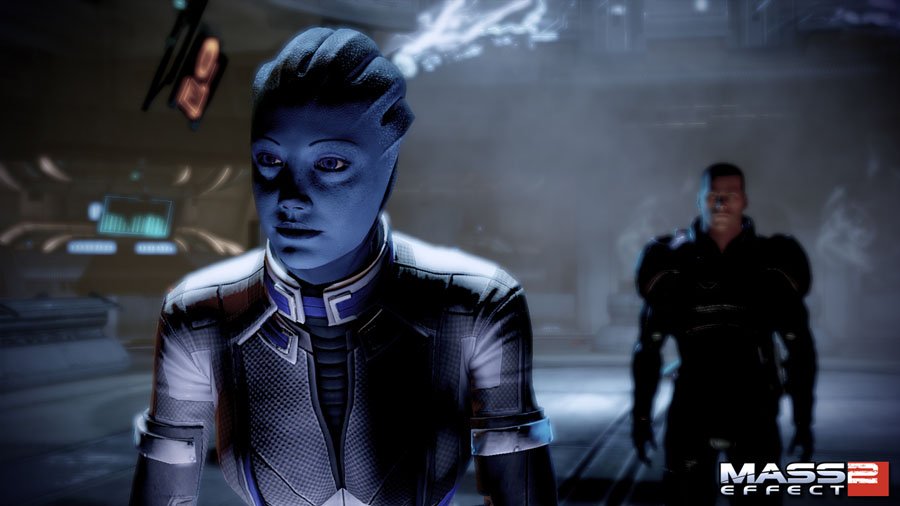
Bioware has done it. While the famous video game studio may have stumbled with previous editions to its stellar space opera, the latest DLC Lair of the Shadow Broker is something to behold. Delivering on not only a great Mass Effect experience but a unique game in and of its own.
Story
------------------------------------------------------
The essential part of the Mass Effect series is its story.
Unfortunately (with the exception of Overlord), previous Mass Effect expansions have not been able to complete fulfill the expectations set by fans of the series. Lair of the Shadow Broker delivers, telling an emotional narrative that even rivals the main campaign.
The story follows Commander Shepard, and former teammate Liara as they struggle to take down a powerful and omniscient crime lord, whom Liara has a personal grudge with. Together the two face terrorists, high flying car chases, personal revelations, and more then a bit of humorous banter.
The plot carries on at breakneck speed. The action continues almost constantly, but feels completely natural. This makes the gaps between the chaos all the more important and impactful. Lair of the Shadow Broker feels truly cinematic, even more so then the main game.
In true Mass Effect fashion, Shadow Broker is a character driven tale. Liara T'Soni, a friend and squadmate from the original game, steals the show. Her character is truly expanded beyond the relatively shallow shell seen previously. Liara actually evolves as a character throughout the course of the narrative, something which is surprising considering that the campaign is relatively short.
However, Liara is not the only scene stealer. Something that Mass Effect 2 was missing was a memorable villain, Lair of the Shadow Broker has several. From the morally ambiguous Spectre Tela Vasir to the Shadow Broker himself, Bioware has collected an interesting rogue's gallery.
Even the normally hollow Shepard has his moment to shine. Perhaps where Shadow Broker is most memorable is its fun and amiable relationship created between its protagonist and Liara. The two joke and banter like old friends, and it feels incredibly genuine. It's also really funny.
Unfortunately, the same cannot be said for your squadmates. Although Bioware makes sure to add in a cool feature that allows them to further flesh out your battle hardened team, your squad will once again remain completely silent for this mission. While understandable due to budget constraints, it's still a frustrating experience.
+Exciting Main Plot
+Dozens of memorable moments
+Great Characters
+Great Comic Relief
-Silent Squadmates
Score: 38/40
Gameplay
-----------------------------------------
Story is the only aspect that makes Lair of the Shadow Broker such a success. The expansion delivers everything the fans have come to love with the addition of a new temporary squadmate, new game feature, smarter AI, and interesting combat locales.
While she does not remain with your party permanently, Liara makes an interesting and welcome addition to your team. Her biotics powers are unique, and allow for some combat. Liara's addition to the game also comes with a revistable location that will updated with upcoming expansions.
The enemies are also more intelligent. They can now throw flash-bang grenades and employ clever flanking tactis, all adding to the experience. Add on some of the most original locations in the history of the series and you have some really memorable combat sequences.
Easily the most drastic edition to the game, the high speed car chase may be the clunkiest edition as well. While its exciting and a fun change, the controls for the vehicle are stiff and confusing. Luckily, this experience is so short that you are ultimately left with a cool experience without the frustration.
+All that made Mass Effect 2 good
+Liara
+Smarter enemies
+Memorable Locales
+/- Chase Sequence
Score: 38.5/40
Graphics
---------------------------------
Mass Effect has always been a stunningly beautiful game, and Lair of the Shadow Broker continues this to great degree. With great new locales that look jaw-droppingly good, and increasingly complex character animations Lair of the Shadow Broker looks better then ever.
While you may encounter the occasional awkwardly animated scene, there is little negative to be found.
+Locales
+Character Animations
-Bugs
9.5/10
Sound
----------------------------
Mass Effect 2 has perhaps some of the best sound ever in a video game. From expertly crafted sound effects, genuine voice acting, and a powerful score, the game is an absolute aural treat. Lair of the Shadow Broker is no different.
The same expert voice acting returns, along with Jack Wall's score. The music itself is perhaps even more spectacular this time around. Jack Wall pens new themes for the Shadow Broker and his team, while incorporating themes from the first Mass Effect to accompany Liara.
+Score
+Voice Acting
+Sound Effects
Score 10/10
---------------------------------------
Overall:
Definitely the best edition to the Mass Effect franchise in months, this expansion is necessary for any fan of the series.
Aggregate/Overall Score: 96
Friday, June 11, 2010
George R.R. Martin's "Sandkings"
2:01 PM |
Posted by
PaddyWagon
So the other day, I ran across this oldie-but-goodie from everyone's favorite author, George R.R. Martin. It's a short story from a collection of short stories by Martin, come across by COMPLETELY LEGAL means on the internet
Here's a short description from fanfiction.co.uk
I personally thought these short stories of Martin's were better than his long Song of Ice and Fire series. It has Martin's classic narrative style, but kept succinct and fast-paced, where his several thousand page tomes of Ice and Fire can sometimes drag on (dragon (see what I did there?)).
Original source of quote: http://www.fantasticfiction.co.uk/m/george-r-r-martin/sandkings.htm
Here's a short description from fanfiction.co.uk
"When Simon Kress returned to his home planet of Baldur from an offworld business trip, he was amused to find that his tank of Earth piranhas had cannibalized themselves into extinction, and of the two exotic animals that roamed his estate, only one remained. Now, in search of some new pets to satisfy his cruel pursuit of amusement, Simon finds a new shop in the city where he is intrigued by a new lifeform he has never heard of before ... a collection of multi-colored sandkings. The curator explains that the insect-like animals, no larger than Simon's fingernails, are not insects, but animals with a highly-evolved hive intelligence capable of staging wars between the different colors, and even religion--in the form of worship of their owner. The curator's warning to Simon about the regularity of their feeding, unfortunately, was not taken seriously...."
I personally thought these short stories of Martin's were better than his long Song of Ice and Fire series. It has Martin's classic narrative style, but kept succinct and fast-paced, where his several thousand page tomes of Ice and Fire can sometimes drag on (dragon (see what I did there?)).
Original source of quote: http://www.fantasticfiction.co.uk/m/george-r-r-martin/sandkings.htm
Wednesday, February 10, 2010
Halo Legends: Odd One Out-Review
7:44 PM |
Posted by
Nick

The title is bizarrely fitting for this weird piece of anime. It's not part of the Halo canon and is was intended to be a comedy, but even with that its just a bizaare ten minute short.
We have Spartan 1337, a weird little defunct Spartan which seems like he belongs in an episode of Naruto. Well Spartan 1337 is stranded from the rest of his team on a planet after Master Chief and Cortana leave him behind. After screaming a bit he meats three children dressed by cavemen, and is attacked by their friendly dog like pet tyrannosaurus rex. Yes, they have a t-rex. Trust me, it just gets weirder. Meanwhile, a random Covenant prophet sends out a mentally retarded genetically enhanced gorilla thing to attack the Spartans, and the gorilla starts wreaking havoc on people. Theres some bizaare action sequences, and 1337 ends up meeting the cavechildrens older siblings who live with a computer in a log cabin. So then 1337 and the older siblings go have a kung fu battle with the gorilla. Then a spaceship turns rainbow color and shoots the gorilla with a lazer gun and everyones happy again. Oh yeah, Spartan 1337 gets carried away by a pterodactyl.
I'm not sure what to think. This is certainly one of the strangest things I've seen in a while. It wasn't necessarily funny. The jokes it made were blatant and unfunny. I think I found more humor in just how bizarrely over the top this cartoon was.
Score: -B (A fun joyride of crap)
Halo Legends: Origins 2-Review
7:18 PM |
Posted by
Nick

Well, apparently Bungie hadn't had enough hitting us over the head with old information, and decided to make Origins 2, unlike the previous episode this recounting of Halo lore seems to have much more of a cohesive narrative following the spread of war across the galaxy. However, there are many things about this episode that are confusing and intriguing at the same time.
Origins 2 is a well crafted and animated episode, and uses the Halo soundtrack to perfection to tell the more immediate history of the Halo universe. The depiction of human galactic colonization is interesting to watch and so are the early battles with the Covenant. While they tell a familiar story, unlike the first episode of Origins the scenes here are depicted in a much more interesting manner. There is one sequence of the Covenant and the UNSC fighting the Flood that is especially fun to watch, and is a standout moment in the whole Halo Legends series.
However, there are some points where its appears that the continuity of the Halo saga has been misplace or confused. Events seem out of place, or just don't exist in the Halo canon, which seems odd for an episode following the origins of the Halo universe. There is also a rather annoying hint at a fourth Halo game, which seems a bit unnecessary if you ask me.
Score: B
Halo Legends: Homecoming-Review
6:52 PM |
Posted by
Nick

The Spartans are in many ways the center of the Halo universe. Even more so then the Halo rings themselves, these genetically enhanced supersoldiers are the real epicenters of the plot, and the characters we interact with the most. However, outside of the Halo novels very little is explored about their creation and origins.
Homecoming tells the story of one Spartan, Daisy, across her career. We get a detailed depictions of her early life, training, failed escape attempt, and a pivotal battle in her career. The anime works well as short fifteen minute biopic that also details the complex morality behind the Spartan program, and aspect that is often overlooked by the testosterone filled Halo universe. Daisy's story is a captivating watch that keeps you interested throughout the entire fifteen minute run. The action is also handled well carrying the necessary emotion needed for the story.
There is also a cameo at the end of the episode that is handled surprisingly well, and delivers the right send off to the episode
If there is one major flaw in Homecoming it is the bizaare flashback driven narrative. It takes you a good five minutes to understand whats really going on, and in an anime that lasts only fifteen that is a librety that costs it dearly. The voice acting in some areas also feels flat and insincere.
Overall, Homecoming is a brilliant addition to the Halo Legends saga and will probably rank as one of the better episodes of the series with its emotional character study.
Score: -A
Halo Legends: Prototype-Review
7:30 AM |
Posted by
Nick
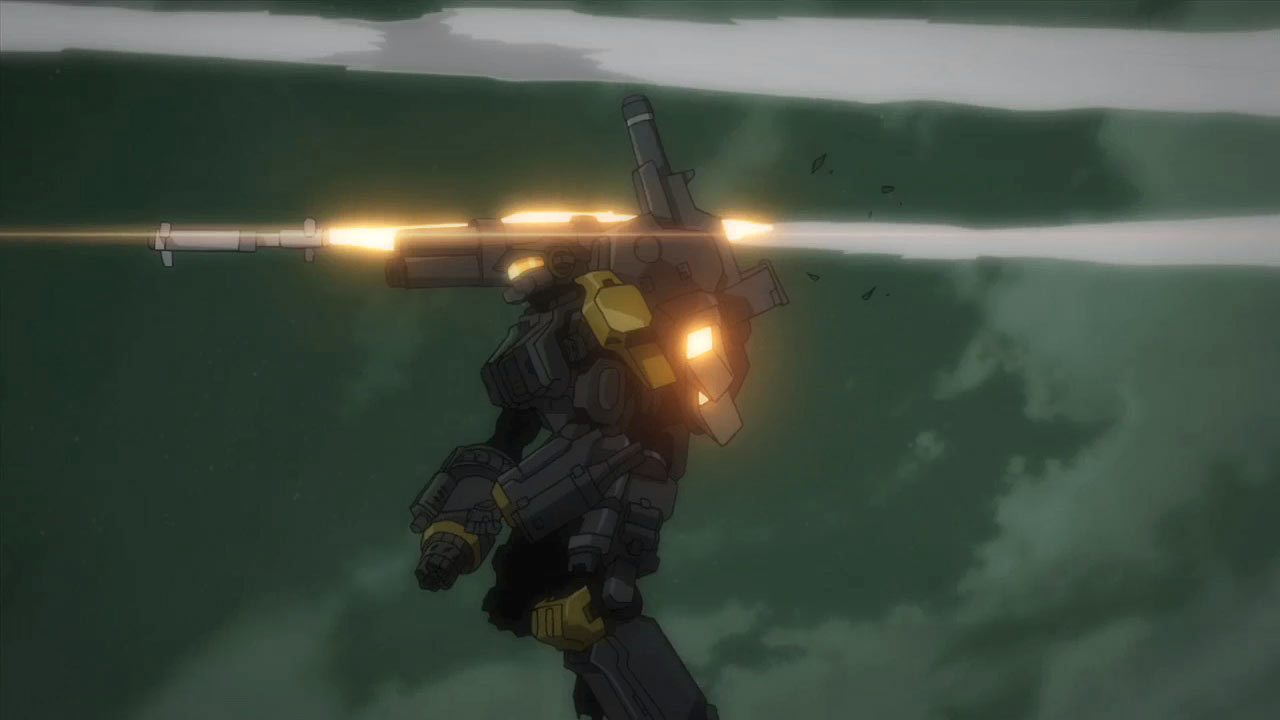
Wow. A Halo Legends episode that was actually really good? Somebody slap me because I must have drifted into the Negative Zone or something. No I do not lie, Prototype by Studio Bones is a damn good episode.
The story follows Ghost, a UNSC marine who several years back got most of his team killed in order to complete a mission. Now faced with an overwhelming Covenant attack, Ghost dons a protoype piece of armor in order to hold of the enemy and get his remaining team members to safety.
The story may sound simplistic, but Studio Bones manages to inject surprising personality into the character Ghost. His story of redemption and self awareness is a familiar but powerful story that is thankfully delt with in a rather subtle manner.
The action in this episode is also top notch. Drawn in an anime style more akin to Origins and The Babysitter the battle between the marines, the Covenant, and the prototype armor is exhilirating and has the necessary emotion for the story. Unlike such travesties as the Package, Prototype finds that necessary balance between action, story, and character. It is also nice to not have a single Spartan appear throghout the episode, putting the focus on the characters that are often overlooked in the Halo universe.
Overall, Halo Legends: Prototype is a wonderful piece of anime that suceeds in its mission of telling a captivating and action packed story, especially one that lasts only fifteen minutes long.
Score: A
Halo Legends: Origins-Review
7:20 AM |
Posted by
Nick

Few can deny that for a shooter Halo has a rather indepth lore. The origins of the Covenant, the Halo rings, the flood, and even the Spartans have a surprisng originality to them. So why is it that this episode detailing the origins of the Halo universe lacks that spark?
The episode picks up following the events in Halo 3, as Cortana relates to a comatose Master Chief the origins of the rings and the flood. What could have been an interesting look at the Flood's war with the Forerunners instead becomes a standarad recounting of what we already know. Not even a look at the Forerunners themselves is truly interesting enough to save this episode.
The animation is a welcome return to a more traditional anime style, similar to The Babysitter, which is welcome after the two previous episodes bizarre design choices.
In short Halo Legends: Origins suffers for telling a story even the most minor Halo fan is familiar with, and refuses to make it interesting at that.
Score: C+
Tuesday, February 9, 2010
Mass Effect 2 DLC: Normandy Crash Site-Review
8:47 AM |
Posted by
Nick

Bioware has promised us much more DLC for Mass Effect 2, which only recieved two extra missions over two years of release. Two pieces of DLC were availible with launch, just like Bioware's other RPG powerhouse Dragon Age Origins. Are these extra missions and characters worth downloading?
First off we have the Normandy Crash Site. In the very beginning of Mass Effect 2 your beloved starship from the original installment is destroyed by a mysterious assailant. The Normandy Crash Site offers you a chance to explore the crash site of your trusty spaceship.
Story
-----------------------------------------------------------------------------------------------
For an RPG DLC, the Normandy Crash Site is surprisingly lacking in the story department. The main plot centers around you walking around the wreckage of the Normandy collecting dogtags, and thats it. You occasionally get flashes of characters of the original game, but no dialogue. The story is so minimalistic and poorly rendered that its surprise that Bioware released it.
+Some Nostalgia
-No Dialogue
-No Plot
Score: 5/40
Gameplay
-------------------------------------------------------------------------------------------------
Well, er...the gameplay is also boring. Collecting dogtags is a laborious task that holds no true reward. The only true gameplay reward is the multitude of resources that can be found in area. This might save you some scan time, but overall doesn't stop the overall monotony of this mission.
+Plentiful Resources
-No Combat
-Boring
-Difficult
Score: 10/40
Graphics
------------------------------------------------------------------------------------------------
Well, the graphics are the only true upside to this level. The crash site is surprisingly eerie and emotional. Seeing the crashed Mako and torn apart hull strikes a surprising emotional resonance. The planet's snowy atmosphere also is surprisingly captivating and beautiful to look at.
+Atmospheric
+Oddly Emotional
Score: 9/10
Sound
-----------------------------------------------------------------------------------------------
The sound that made the main game so spectacular is still there, but to a much smaller degree. There is no dialogue and no cool sound effets either. The only true ambience you here is another superb score by Jack Wall.
+Jack Wall's score
-No dialogue
Score: 6/10
-----------------------------------------------------------------------------------------------
The Normandy Crash Site is a disappointment to say the least, but its a free disappointment. You might as well waste fifteen minutes on this crap if your bored. If it had any other price tag it would be worth ignoring.
Aggregate Score/Overall Score: 30/100
Sands of Destruction
7:56 AM |
Posted by
Anna

So due to the copious amounts of fluffy white stuff falling from the sky, I have been cooped up inside watching anime and knitting random articles of clothing to keep my father warm. One of the anime I have come into contact with is Sands of Destruction.
Opening:
Meh...the opening was forgettable. The music was okay and the animation was okay. All in all, it was simply okay.
Plot:
Sands of Destruction is based on a Japanese RPG of the same name. It takes place in a world ruled by anthropomorphic creatures called Beasts and all the oceans of the world have turned to sand. Humans are slaves and there are some Beast-Men (half human, half beast) who are kind of like the middle class of society. The main protagonist of the story, Kyrie Illunis, was working in a Beast-Men cafe until a member of the "World Destruction Committee", a girl named Morte, reveals him to be a human posing as a Beast-Man. Morte is in possession of a ball called the Destruct Code which will destroy the world when set off. Morte and Kyrie strike up a....friendship, and they travel the world with a talking bear so that they can destroy the world.
Review:
This is one of those anime that you really want to be good. Unfortunately, not so. The first episode was great. The premise is fantastic and the voice-acting was really good. But then the story came up..... I don't know what happened! Here was an anime that had promise and could have been really amazing, but it completely fell flat.
There were tons of holes in the story, I wasn't convinced by the characters, there was practically no chemistry between Kyrie and Morte (supposed "love interests"), and there was this talking teddy bear that said "kuma" at the end of every sentence. IT WAS FRICKIN' OBNOXIOUS! The characters even commented on how weird it sounded. And then, when the teddy bear says that he can't do that, kuma, it is a symbol of honor in my tribe, kuma, you kind of expect him to go on about his tribe and where he came from. And does he? NO! Instead, they fill up the space with the three of them walking down the hall. And another thing that bugged me, while they are walking, the Destruct Code gets pick-pocketed by some random fox-chick, and Morte doesn't notice? She's supposed to be this bad-ass warrior babe and she doesn't even notice that she's been robbed? Highly unlikely.
And then there's the issue of the animation... It started out good; the beginning was well-animated and convincing. But then as the episodes progressed, the animation quickly went downhill. The facial expressions of the characters didn't match with the emotion in the voices and made it seem like they were just coming out of a Botox session and their faces were frozen.
All in all, I wish this could've been better, but sadly, it wasn't.
Art: 10
Originality: 22
Dialogue: 10
Story: 11
Total Score: 53
Well, that's all for now, folks! Stay warm.
~Anna
Subscribe to:
Posts (Atom)